
Loading...
Serving Palm Beach, FL and surrounding areas. (561) 954-1305
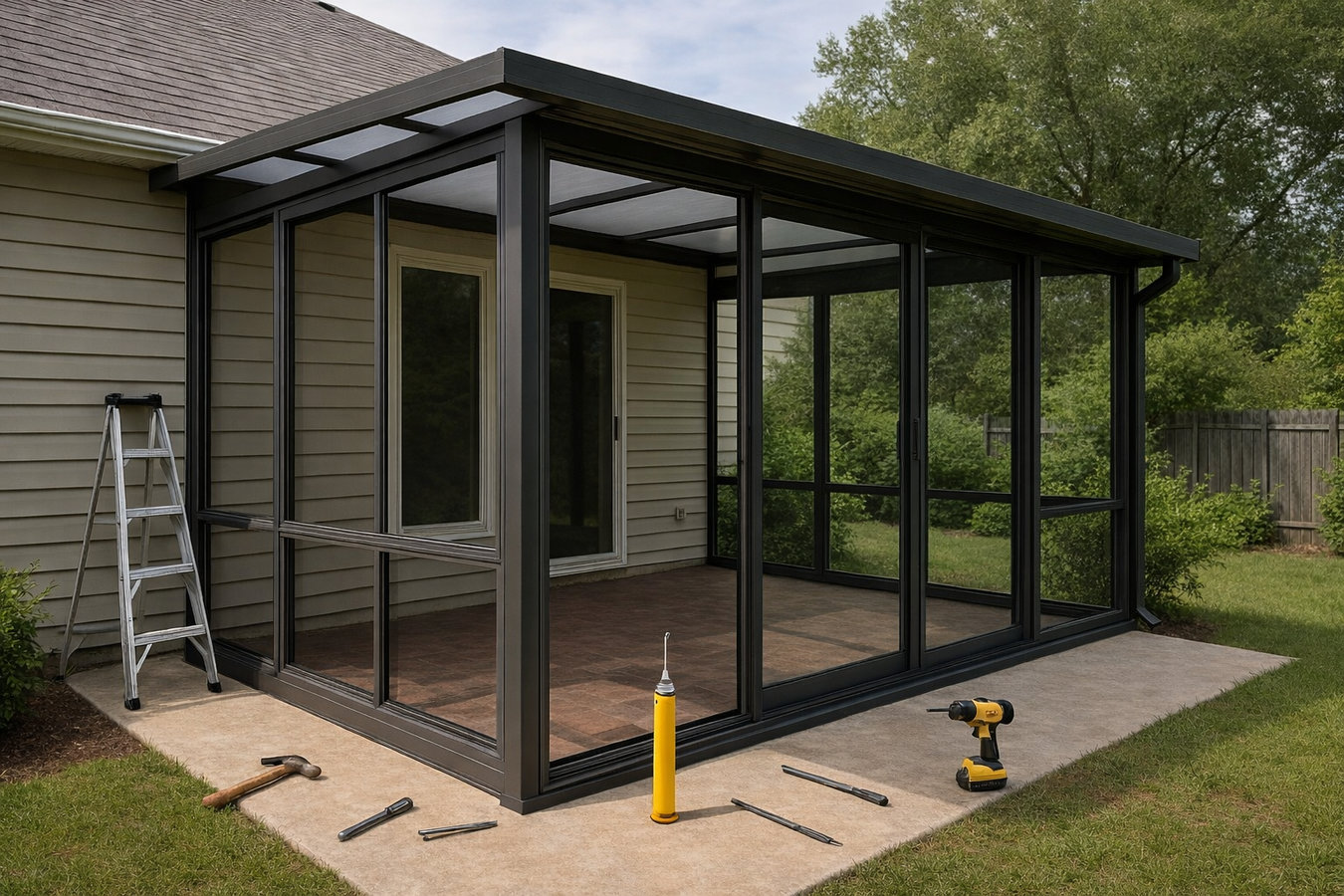
Stop losing your evenings to mosquitoes and no-see-ums. We build permitted, wind-engineered screen enclosures on Palm Beach patios so your outdoor space works every month of the year.
Screen room installation in Palm Beach means building an aluminum-framed, fully screened enclosure onto your existing patio slab - most standard installations run one to three days on-site once permits are approved and materials arrive.
The crew anchors a structural frame to your slab or a new concrete pad, assembles the framing sections, installs a screened roof, and stretches and fastens screen panels into the frame. Unlike a fully enclosed sunroom, a screen room is open to the breeze - it keeps insects out while letting air flow freely. If you want full enclosure with glass panels and weather protection, our patio enclosures service covers those more enclosed options. Most of the installation work happens outside your home, so your daily routine inside is barely affected.
In Palm Beach, where biting insects are active year-round and outdoor living is a real part of everyday life, a screen enclosure turns a patio you rarely use into a space you actually live in. The permit process adds several weeks to the overall timeline - but it means your finished enclosure is engineered, inspected, and on record for insurance and resale.
If your patio is perfectly comfortable but biting insects drive you inside every evening, a screen room solves that problem directly. In Palm Beach, where mosquitoes and no-see-ums are active year-round, this is one of the most common reasons homeowners decide to enclose their patio.
Loose or torn screen is not just a cosmetic issue - gaps let insects in and allow the damage to spread. Salt air, UV exposure, and Palm Beach's afternoon storms accelerate wear on older enclosures. If repairs are piling up, a full replacement with current materials and wind-load engineering is often the smarter investment.
A screened enclosure gives children and pets a contained area to play outside without the risk of wandering or insect exposure. For families in Palm Beach's landscaped neighborhoods, this kind of defined outdoor space is genuinely useful every day of the year.
A screen room with a solid or shaded roof section gives you filtered light and shade while keeping the space open and breezy. If direct sun makes your unshaded patio feel punishing for much of the day, even a simple screened enclosure with overhead cover changes how usable the space is.
The biggest decisions in a screen room installation are the screen mesh type and the roof design. For homeowners dealing with no-see-ums - a real issue all along Florida's coast - a finer no-see-um mesh blocks those tiny insects that pass right through standard screen. For homeowners who want more shade without losing the open feel, a solid roof panel section over the sitting area makes the space comfortable even in the peak of the afternoon. We discuss both choices during the estimate so your screen room is built for how you actually plan to use it. If your goals are closer to a fully enclosed space with glass panels and weather protection, a patio-to-sunroom conversion or enclosed patio enclosure is the more appropriate service, and we are happy to walk through the differences before you decide.
Frame color, door placement, and enclosure height are all customizable within the constraints of your slab and HOA rules. We source aluminum framing and hardware suited to coastal South Florida conditions - corrosion-resistant finishes and stainless fasteners that hold up in salt air rather than corroding within a few years. Every enclosure we build is submitted for permit with engineered wind-load drawings and goes through final inspection.
Best for homeowners whose main goal is keeping mosquitoes out and adding shade - the most common and cost-effective option.
For homeowners who need protection from the tiny biting insects common along Florida's coast - trades slightly reduced airflow for complete insect coverage.
Adds overhead protection from rain and direct sun while keeping the sides open and breezy - the right fit for homeowners who want to use the space during afternoon storms.
For homes with an older screen room that has corroded hardware, sagging screen, or outdated framing - a full tear-out and rebuild with current wind-load engineering.
Palm Beach is a barrier island, which means every property here sits in salt air from the Atlantic Ocean on one side and Lake Worth Lagoon on the other. That environment is unforgiving on aluminum framing, fasteners, and hardware that is not chosen specifically for coastal conditions. Lower-grade hardware corrodes faster in salt air, which leads to staining, weakened connections, and a structure that needs repair or replacement far sooner than it should. We work on Palm Beach properties regularly and specify materials that hold up here - that detail shows up in how the enclosure looks and functions five years after we leave. Homeowners in Lantana and along the coastal stretch of Palm Beach County face the same salt-air conditions, and we apply the same material standards on every job we do in the area.
Florida's building code requires screen enclosures to be engineered for high wind loads, and Palm Beach County's requirements are among the most demanding in the state. That means your contractor submits engineered drawings with the permit application, and an inspector signs off when the work is done. A screen room built without a permit is a risk when you sell your home or file an insurance claim. In Greenacres and across the county, the same permit and inspection process applies, and we handle all of it on your behalf so you do not have to navigate building departments yourself.
For Florida's wind-load requirements for screen enclosures, see the Florida Building Commission. For information on verifying a contractor's license before hiring, the Florida Department of Business and Professional Regulation provides a free online license lookup tool.
We visit your home, look at your existing patio or outdoor space, take measurements, and discuss your goals - mesh type, frame color, and how you plan to use the space. You leave with a clear written proposal. We respond to all inquiries within 1 business day.
We prepare engineered drawings showing the structure meets Florida's wind-load requirements and submit the permit application to the local building department. If your property has HOA requirements, we flag that process early so both approvals run in parallel where possible.
Once the permit is approved, we order your aluminum framing, screen material, and hardware - often custom-cut to your dimensions. We schedule the installation date once materials are confirmed and on hand.
Installation of a standard screen room typically takes one to three days. After the work is done, the building department sends an inspector to verify the structure was built to the permitted plans. We coordinate that visit and walk you through the finished space before we leave.
We visit your home, measure your space, and give you a clear written quote - no pressure, no obligation, and no surprises about permits or HOA requirements.
(561) 954-1305We hold a current Florida state license covering aluminum and screen enclosure work - verifiable through the state's online licensing database at myfloridalicense.com. We carry liability insurance and workers compensation on every job.
Salt air is hard on screen enclosures. We use corrosion-resistant hardware and properly coated aluminum framing suited to barrier island conditions - not standard inland specs. The quality of the fasteners and finish determines how long the structure looks and performs.
Every screen room we build goes through the Florida permit process with engineered wind-load drawings. We prepare and submit all paperwork, coordinate the inspection, and hand you documentation showing the structure is legal, permitted, and code-compliant.
Every project starts with a free on-site visit and a clear written proposal covering scope, materials, timeline, and pricing. No vague verbal quotes, and no surprises about permit costs or HOA requirements - we flag those upfront.
Getting the permit, the engineering, and the coastal-grade materials right from the start means your screen room works properly and holds up for years. When the inspector signs off and we do the final walkthrough, you have a fully documented structure and a contractor you can reach if anything needs attention later.
If you want more than a screened space - full enclosure, climate control, and glass panels - a patio-to-sunroom conversion is the next step up.
Learn MoreExplore enclosed patio options beyond screen rooms, including glass panel systems that offer more weather protection while keeping a connection to the outdoors.
Learn MoreOur team handles the permit, the engineering, and every detail - reach out now so you can start enjoying your new outdoor space as soon as possible.